
The 10 Microgrid Value Streams
Keeping the lights on during a power outage is usually the selling point of a microgrid. But a new report by Rocky Mountain Institute (RMI) breaks down the 13 value streams that battery storage can provide, and at least ten of them can be delivered by microgrids. It's a reminder that grid-tied microgrids have much more to offer than resiliency, especially microgrids with battery banks.
These services offer real value, can be stacked, and could flip the economics in favor of microgrids. Below are the potential revenue streams that microgrids can feasibly be compensated for. The services are categorized by which stakeholder receives the most benefit.
ISO / RTO Services
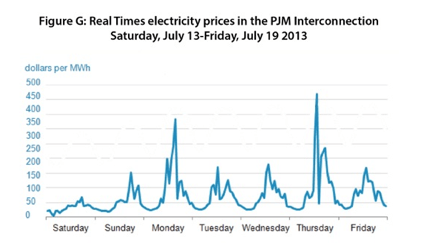
1 Energy Arbitrage - Buy Low, Sell HighThe wholesale cost of energy is increasingly volatile. Microgrid battery systems can exploit this by loading up on cheap cheap energy at night when only the least expensive baseline generators are operating. During peak periods, around 3-7pm, grid operators pay power generators a large premium to meet increased demand. Barrier: Microgrid needs to be able to participate in wholesale markets.
BARRIERS:
- Microgrids don't always have access to wholesale markets.
2 Frequency Regulation - Maintain Balance
3 Spin/Non-Spin Reserves - Plan for the unexpected
BARRIERS:
- Participating here could limit the microgrids ability to perform its primary function of maintaining power during a grid failure. Non-spinning reserves may be needed when the microgrid needs to 'island.'
4 Black Start - It takes electricity to make electricity
Microgrids can be valuable for helping the bulk grid restore power after a power outage. After shutting down, most large generators need outside electricity to restore their operations. Microgrids can use excess capacity, or temporarily dedicate everything for that purpose.
Utility Services
5 Resource Adequacy
6 Distribution Deferral
7 Transmission Congestion Relief
8 Transmission Deferral
Customer Services
9 Increased PV Self-Consumption
10 Backup Power
Considerations
Of course, if the primary purpose of a microgrid is to provide uninterruptible power during power blackouts, that may limit the extent they are able to participate in other value streams. For instance, microgrids probably do not want to sell themselves as spinning/non-spinning reserves because that would require them to dedicate a large portion of their capacity if the grid needs it.
Still, many of the value streams do not drain the capacity of the microgrid, and offer potential for microgrids to stack value and significantly impact the economics of a microgrid.
Regulatory barriers
There are many regulatory barriers that could prevent microgrids from providing their potential value. The biggest impediment is that batteries are often not given an equal playing field with large central generators. Additionally, if an asset provides value to multiple stakeholders, regulation currently makes it difficult or impossible for the utility to be compensated.
Regulations often make it difficult or impossible for a utility to collect revenue from a behind-the-meter energy storage asset. Microgrid value is determined on regulation allowing fair access to markets.
Frequently asked questions
What are the value streams of a microgrid?
Beyond backup power, microgrids can earn from energy arbitrage, frequency regulation, spinning and non-spinning reserves, black start, resource adequacy, distribution and transmission deferral, transmission congestion relief, and increased solar self-consumption. Drawing on a Rocky Mountain Institute analysis of battery storage value, this article identifies at least ten such streams that microgrids can feasibly be compensated for.
What does 'value stacking' mean for a microgrid?
Value stacking is combining multiple revenue and savings streams from a single microgrid asset—for example, providing grid services on normal days while retaining backup power for outages. Because many services do not fully drain the battery, several can be layered together to improve the economics. The U.S. Department of Energy frames the modern microgrid business case around this stacked set of value streams.
Can a microgrid make money when there is no outage?
Yes. On normal 'blue sky' days a microgrid can earn by producing energy, contributing to resource adequacy, and providing ancillary grid services such as frequency regulation. Its resilience value—keeping critical loads powered during outages—is a separate benefit, which the U.S. Department of Energy measures using Value of Lost Load, essentially the customer's willingness to pay for higher reliability.
Why are microgrids becoming more economical?
Falling battery costs are a major factor. BloombergNEF reported that average lithium-ion pack prices fell to a record-low $108/kWh in 2025, with packs for stationary storage specifically dropping to about $70/kWh—the lowest-priced segment for the first time. Cheaper storage improves the payback on the solar-plus-storage systems that anchor most microgrid value stacks.
Why are data centers turning to microgrids?
Grid interconnection can take years, so operators increasingly use onsite generation, batteries, and microgrids as 'bridge power' and for permanent resilience. Roughly 30% of planned U.S. data-center capacity intends to run on behind-the-meter resources, according to Cleanview analysis cited by Utility Dive. Lawrence Berkeley National Laboratory found that the median time from interconnection request to commercial operation now exceeds four years.
What is the biggest barrier to microgrids capturing these value streams?
Regulation. Batteries and behind-the-meter assets are often not given an equal playing field with large central generators, and when an asset benefits multiple stakeholders, rules can make it difficult for a utility to be compensated. As the article notes, a microgrid's value largely depends on regulation allowing fair access to markets.